 how-to
How to Plan a Backyard Wedding on a Budget: 2026 Guide
Table of Contents
- Start With a Realistic Backyard Wedding Budget Breakdown
- Your Backyard Wedding Checklist: 6 Months to the Day
- Backyard Wedding Rentals: What You Actually Need
- Small Backyard Wedding Ideas That Keep Costs Down
- Food, Drinks, and Casual Reception Options
- Site Readiness, Permits, and Neighbor Considerations
- Conclusion
- Frequently Asked Questions
Last Updated: October 12, 2026
Start With a Realistic Backyard Wedding Budget Breakdown
Learning how to plan a backyard wedding on budget starts with one honest number: what you can actually spend. A backyard wedding budget breakdown is a written list that splits your total into fixed costs you cannot avoid and flexible costs you can cut.
Most couples set a total and then guess at each line. That never works. Write the numbers down before you book anything.
A Working Budget Template You Can Copy
Below is the category structure most planners use for a home-hosted wedding. The percentages are a starting allocation, not a rule, shift them once you know your guest count and whether you need a tent. Plug your own total into the right column.
| Category | Typical Share of Budget | What It Covers | Fixed or Flexible |
|---|---|---|---|
| Rentals (tent, tables, chairs, linens) | 15-25% | Shelter, seating, serving surfaces | Fixed once signed |
| Food and beverage | 20-30% | Catering or self-catered, bar, ice | Flexible |
| Photography and music | 10-15% | Photographer, DJ or playlist gear | Fixed once signed |
| Attire and beauty | 5-10% | Outfits, alterations, hair, makeup | Flexible |
| Flowers and decor | 5-10% | Bouquets, centerpieces, signage | Flexible |
| Officiant, license, permits, insurance | 3-6% | Legal and compliance costs | Mostly fixed |
| Stationery and favors | 2-4% | Invitations, programs, gifts | Flexible |
| Contingency reserve | 10-15% | Surprises, weather, last-minute adds | Untouchable |
Two rules make this template work. First, the contingency reserve is not a slush fund, it is insurance. If you spend it on upgrades, you have no cushion. Second, every category must have a name attached to it. If no one owns the flower budget, it drifts.
Fixed Costs vs. Flexible Costs
Fixed costs stay roughly the same no matter what. Flexible costs change with your choices.
- Fixed: marriage license, officiant, rentals (tents, tables, chairs), insurance, permits
- Flexible: food style, flowers, decor, music, invitations, attire
- Fixed: photography and any vendor with a signed contract
- Flexible: guest count, bar options, dessert, favors
Guest count drives almost everything. Cut ten guests and you cut food, chairs, linens, and table space at once. A useful exercise: price your wedding at three guest counts, say 40, 60, and 80, and see which one fits the total you actually have.
Where the Hidden Costs Live
These are the line items couples forget until the invoice arrives:
- Delivery, setup, and teardown fees on rentals, often separate from the rental price
- Generator rental if your home's electrical panel cannot carry a tent's lighting and a DJ
- Restroom trailers when guest count outpaces your home's plumbing
- Trash removal and recycling after a large event
- Overtime charges if your event runs past the contracted rental window
- Insurance rider for a hosted event on your homeowner policy
- Parking or shuttle if street parking is limited
Ask every vendor, in writing, what is included and what is billed separately. A quote that looks low often hides delivery and pickup.
Your Backyard Wedding Checklist: 6 Months to the Day
A backyard wedding checklist keeps a long project from turning into panic. Work backward from your date and give each task a deadline. Here is the timeline we suggest to every couple.
| Time Before Wedding | Task | Who Owns It |
|---|---|---|
| 6 months | Set budget, guest list, and date | Couple |
| 5 months | Book rentals and tent | Couple |
| 4 months | Send invitations, plan food | Couple + helper |
| 3 months | Check permits and insurance | Couple |
| 2 months | Confirm vendors, buy decor | Helper |
| 1 month | Build rain plan, assign jobs | Couple |
| 1 week | Final headcount, delivery times | Couple |
| Day of | Setup and teardown | Rental crew + family |
Assign a name to every task. One person should own the rain plan alone.
Backyard Wedding Rentals: What You Actually Need
Backyard wedding rentals cover the basics your home does not have: seating, shelter, and serving space. Most homes have enough power and parking for a small event but not for 80 guests. That is where rentals fill the gap.
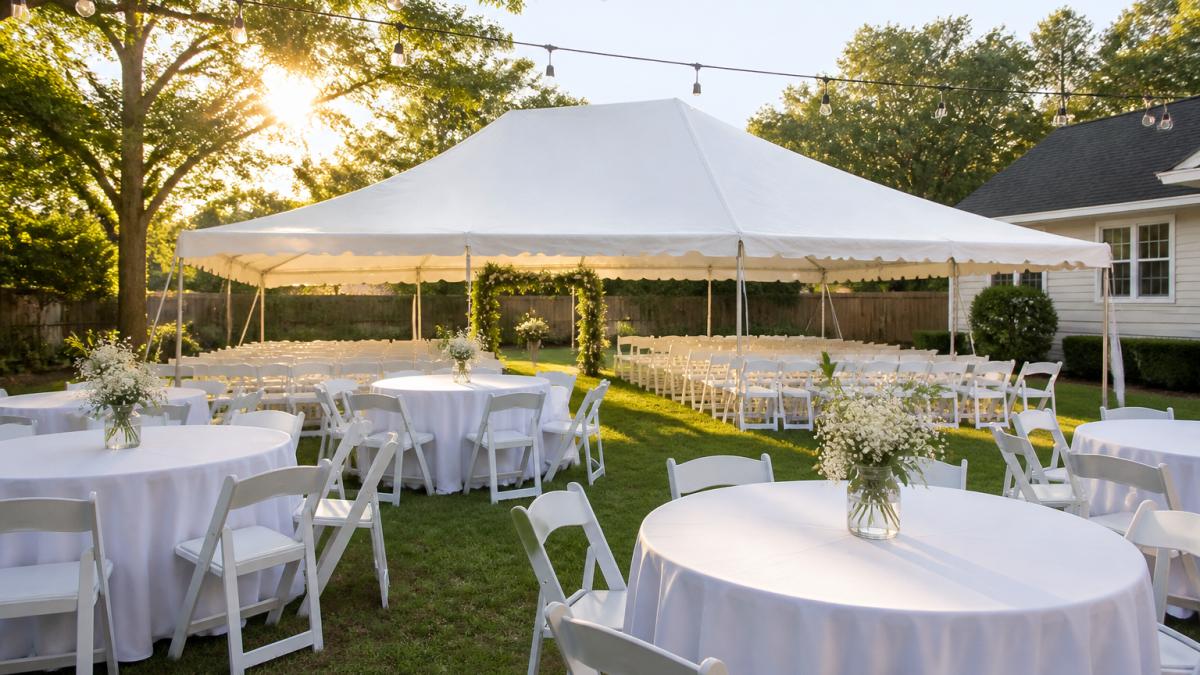
Start with the non-negotiables:
- Tables and chairs for every guest
- Linens if your tables are not presentable
- A tent if you have no covered space
- Lighting for evening events
- Trash bins and a clear serving area
Tents, Flooring, and Weather Protection
A tent is your rain plan and your shade plan in one. Size it so guests can stand and move, not just sit. Add sidewalls if wind or rain is likely.
Flooring matters on grass. A dance floor or walkway keeps heels and chairs from sinking. For heat, ask about fans. For cold evenings, ask about heaters.
Weather is the one thing you cannot control. A written backup plan, whether that is a tent, a garage, or a shifted start time, saves the day.
Small Backyard Wedding Ideas That Keep Costs Down
Small backyard wedding ideas work because a shorter guest list lowers every other cost. A 30-person wedding needs fewer chairs, less food, and a smaller tent. The savings stack.
Try these:
- Host a brunch or afternoon cake-and-champagne instead of a full dinner
- Use one long table instead of many rounds
- Borrow serving dishes and coolers from family
- Skip printed programs and use one welcome sign
- Reuse ceremony flowers at the reception
Food, Drinks, and Casual Reception Options
Food is usually the biggest flexible cost. A casual reception lets you serve good food without a plated dinner. Pick a style that fits your crowd and your kitchen.
- Pizza or taco bar: easy to scale, low cost per guest
- Potluck: family brings dishes, you provide the main
- BBQ or grill station: works well outdoors
- Dessert-only reception: cake, cookies, and drinks
For drinks, keep it simple. A self-serve station with water, lemonade, and a few options covers most crowds. Check local rules before serving alcohol, and never let guests drive after drinking.
Site Readiness, Permits, and Neighbor Considerations
Before you send a single invitation, walk your property like a vendor would. Most backyard wedding problems are not decoration problems, they are infrastructure problems. This checklist catches them early, when fixes are cheap.
Site-Readiness Checklist
Work through each item and write down what your property can and cannot support.
- Power: Find your electrical panel. Add up the amps your tent lighting, DJ, catering equipment, and any heaters or fans will draw. If the total exceeds what your panel can safely carry, you will need a generator. Extension cords across a lawn are a tripping hazard and a code problem.
- Water: Confirm you have a working outdoor spigot and enough hose length to reach the serving and prep areas. Caterers often need a dedicated water source.
- Restrooms: A single household bathroom is usually fine for 25-30 guests. Above that, plan on a restroom trailer. Count the number of stalls against your guest count and event length.
- Parking: Measure how many cars fit in your driveway and on the street without blocking driveways, mailboxes, or fire hydrants. If the answer is fewer than your guest count needs, budget for a shuttle or off-site parking.
- Access: Map the path a delivery truck and a tent crew will take. A tent needs a clear route to the setup area. A narrow gate or a low branch can stop a delivery cold.
- Waste: Arrange extra trash and recycling bins. Confirm who hauls them away and when.
- Ground conditions: Note slopes, soft spots, sprinkler heads, and drainage. A tent on a slope needs leveling. A dance floor on soft grass needs a subfloor.
Permits, Insurance, and Local Rules
Check your local rules before you send invitations. Many towns limit noise hours, parking, and the number of guests at a home event. Some require a permit for a tent above a certain size, and some require a permit for any temporary structure. Call your city or county office and ask specifically about:
- Tent and temporary-structure permits
- Noise ordinances and the hour music must stop
- Maximum occupancy for a residential gathering
- Alcohol rules, including whether you need a permit or a licensed server
- Fire code requirements for tents, exits, and extinguishers
Ask your insurer whether your homeowner policy covers a hosted event. Many policies need a rider for large gatherings, and some exclude business-related events entirely. This is a small cost that protects you from a large one. Get the answer in writing before you sign rental contracts.
Neighbor Considerations
Your neighbors can make or break the day. Treat them as stakeholders, not obstacles.
- Tell them the date and hours in advance, ideally in person
- Keep music at a reasonable level and stop at the posted hour
- Do not block driveways or mailboxes
- Offer a parking plan so cars do not line the street
- Consider a small gesture, a bottle of wine or a note, for the closest homes
If a neighbor has a conflict, you want to know weeks ahead, not the morning of.
Conclusion
A backyard wedding rewards planning, not spending. The couples who stay on budget measure the yard, write every cost down, and build a rain plan before the first rental is booked.
Backyard Events Rental makes that part simple. We offer tents, tables, chairs, and lighting sized to your yard. We handle the equipment so you can focus on your guests.
Book now and let us help you host a wedding you will remember.
Frequently Asked Questions
How much money do you give for a backyard wedding?
Cash gifts for a backyard wedding typically follow the same etiquette as any wedding, with guests often giving $50 to $150 depending on their relationship to the couple and their budget. Close family and wedding party members may give more. Since backyard weddings usually cost less than traditional venue events, some guests adjust their gift downward, but there is no rule requiring this. A thoughtful card with a personal note is always appropriate if cash is not an option.
Do you need a permit to have a wedding in your backyard?
Permit requirements vary by city and county. Many municipalities require a permit for tents above a certain size, amplified music, or events exceeding a set guest count. Check with your local planning department before booking rentals. Some areas also enforce noise ordinances that limit music after a certain hour. If alcohol is served, a one-day liquor liability permit may be needed. Confirm requirements early so nothing derails your backyard wedding plans.
What rentals do you need for a backyard wedding?
Most backyard weddings require tents for weather protection, tables and chairs for dining and ceremony seating, lighting, and possibly a sound system, and serving equipment for food and drinks. You may also need heaters or fans depending on the season. Create your guest list first, then match rental quantities to your headcount. A rental provider can help you finalize the list based on your yard size and layout.
How do you plan a backyard wedding on a small budget?
Start with a realistic budget breakdown that separates fixed costs like rentals and food from flexible costs like decor. Keep your guest count small to reduce rental and catering expenses. Host the ceremony and reception in the same space to avoid double setup. Use DIY decor, borrow items from friends, and prioritize rentals that affect guest comfort like tents and seating. Booking early often secures better availability and avoids rush fees.