 How-to
How to Fit an Event Tent in a Small Backyard
Last Updated: November 2, 2026
Quick Summary
To fit a small backyard tent, measure your clear usable rectangle first, then subtract 5 to 10 feet per side for stakes, guy wires, and setup access. Match the remaining square footage to your guest list, allowing 10 to 15 square feet per seated guest and 6 to 8 per standing guest.
- Leave 3 feet from fences and at least 2 feet inside property lines for the tent footprint.
- Keep walkways at least 4 feet wide so two people can pass comfortably.
- A 20-by-30-foot tent can seat about 40 guests at 8-foot banquet tables with a small dance floor.
- Leave 3 feet between the tent roof and tree branches, and 2 feet from house eaves.
- Call 811 before staking anything to have buried utilities located.
Table of Contents
- Start With Usable Space, Not Nominal Tent Dimensions
- How to Measure a Backyard for a Tent
- Party Tent Sizes and Capacity: Matching the Tent to Your Guest List
- Small Tent Layout Ideas for Dining, Dancing, and Flow
- Backyard Tent Setup Safety: Ground, Anchoring, and Weather
- Rental, Delivery, Setup, and Permit Questions to Ask First
- Book Your Backyard Tent With a Site Check
- Frequently Asked Questions
Start With Usable Space, Not Nominal Tent Dimensions
A small backyard tent sounds generous until you realize it may need several extra feet on every side. That gap between the label and reality is where most small-yard plans fall apart.
Here is the core idea: the number on the rental listing is the covered area, not the footprint. Stakes, guy wires, and setup access all eat into your open space. All City Event Rentals' tent sizing guidance notes that a large tent may need an extra 5 to 10 feet per side for anchoring and installation.
So measure first. Pick the tent second.
How to Measure a Backyard for a Tent
Grab a measuring tape, a notebook, and a helper. Walk the yard and record the full length and width of your open space. Then subtract obstacles: fences, the house wall, trees, sheds, and anything you cannot move.
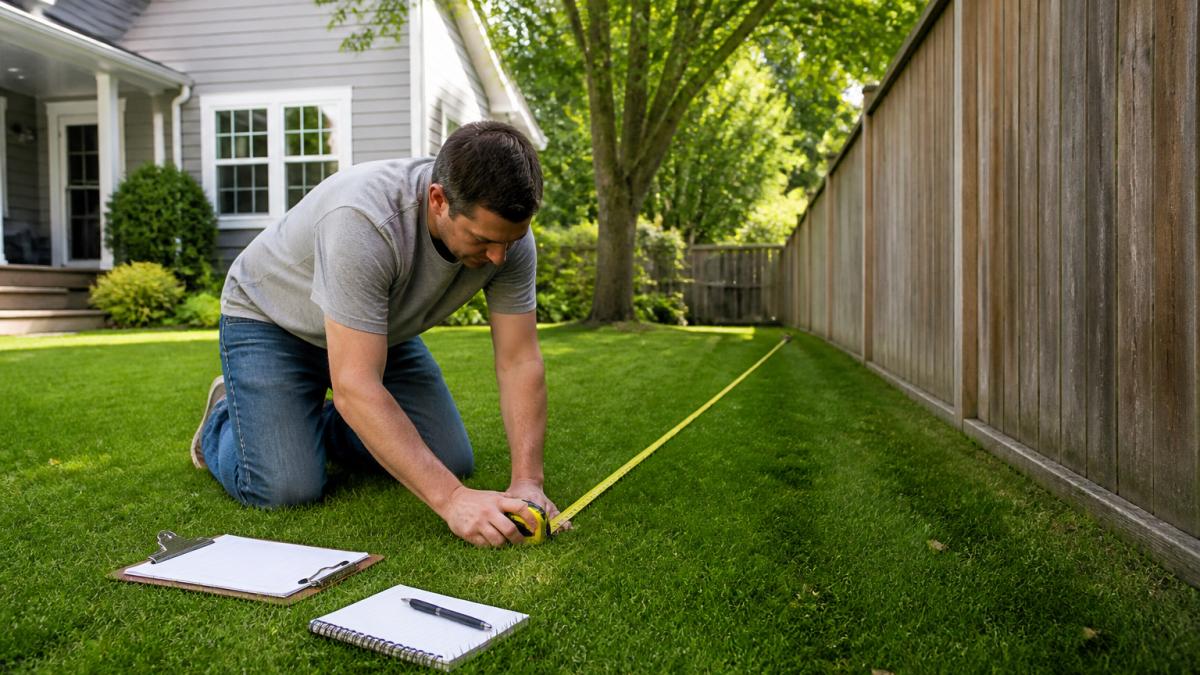
Measure at ground level, not by eye. Slopes and dips change the real usable area. Write down the smallest clear rectangle you can draw. That rectangle is your true limit.
Map Clearance From Fences, Buildings, Trees, and Utilities
Clearance is the space you must leave empty around the tent. Skip it and you get a tent that crowds the fence or blocks the gate.
- Fences and walls: leave room for stakes and tie-downs.
- Trees: watch for low branches and roots near the surface.
- Utilities: mark the gas line, septic lid, and buried cables.
A common mistake is measuring the tent's covered size and calling it done. Always measure the full footprint plus clearance.
Clearance is the space you must leave empty around the tent, and these are the distances the article recommends.
| Obstruction | Clearance to leave | Note |
|---|---|---|
| Fences and walls | 3 feet from fences | Room for stakes and tie-downs |
| Property lines | At least 2 feet inside | Check local setback rules |
| House eaves and gutters | 2 feet from tent edge | Keeps roof water off the tent |
| Tree branches | At least 3 feet from tent roof | Trim or shift if within 2 feet of peak |
| Septic lids and utility boxes | Tent legs at least 3 feet away | Never stake through a septic line |
| Walkways | At least 4 feet wide | Minimum for two people to pass |
Party Tent Sizes and Capacity: Matching the Tent to Your Guest List
Capacity depends on how guests sit or stand, not just tent size. A seated dinner needs far more room per person than a standing cocktail hour. Sharp Event Rentals' outdoor tent planning tips suggests roughly 10 to 15 square feet per seated guest and 6 to 8 square feet per standing guest.
Match the tent to the event, not the other way around:
- Seated dinner: plan the most space per guest.
- Cocktail or mingling: guests need less room.
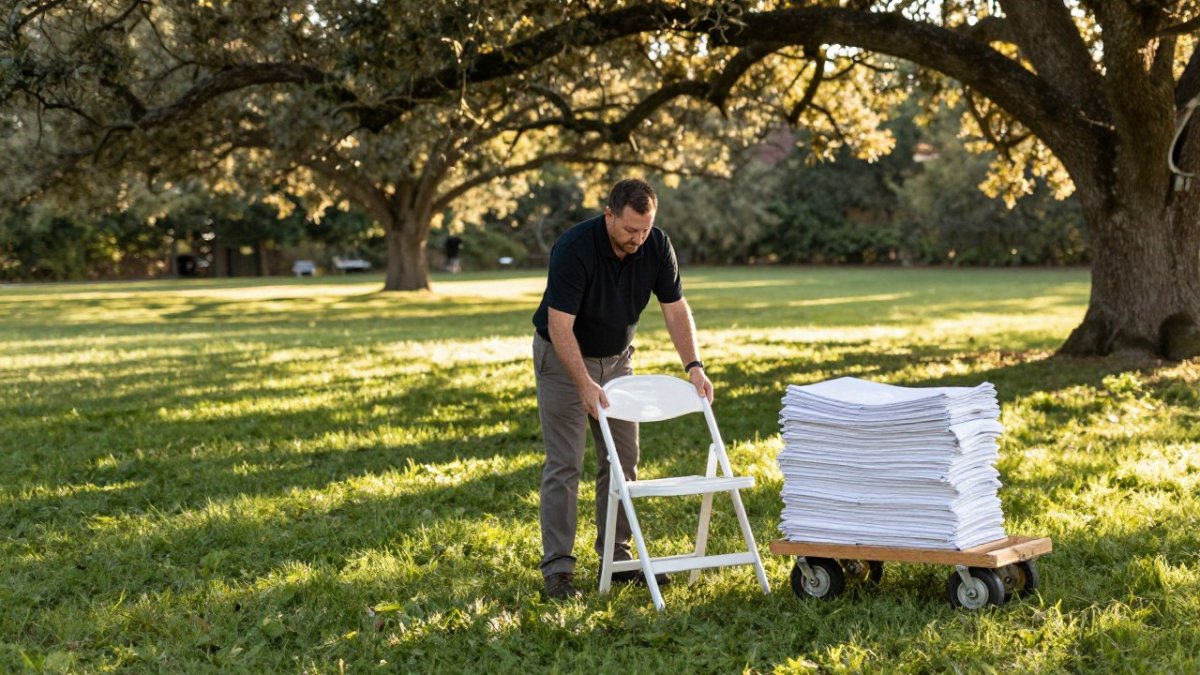
- Ceremony seating: rows save space over rounds.
For current sizes and pricing, visit the Backyard Events Rental website or request a quote.
A Simple Tent-Size Calculator for Small Yards
Here is a quick way to size a tent without guesswork:
- Measure your clear rectangle (length x width).
- Subtract 5 to 10 feet per side for clearance.
- Multiply the remaining length by width for usable square feet.
- Divide by your per-guest space (10 to 15 sq ft seated, 6 to 8 standing).
- Round down to the nearest standard tent size that fits.
Example: A yard with 30 feet of clear width and 40 feet of clear length gives 1,200 square feet. Take off clearance and you might have 20 by 30 feet of usable space. For a seated dinner at 12 square feet per guest, that fits about 50 people. For standing, it holds far more.
Small Tent Layout Ideas for Dining, Dancing, and Flow
A tight tent works when you plan the flow before the furniture arrives. The goal is to keep guests moving without squeezing past chairs or stepping over table legs.
Here are four layouts that work in small yards, with the space each one demands:
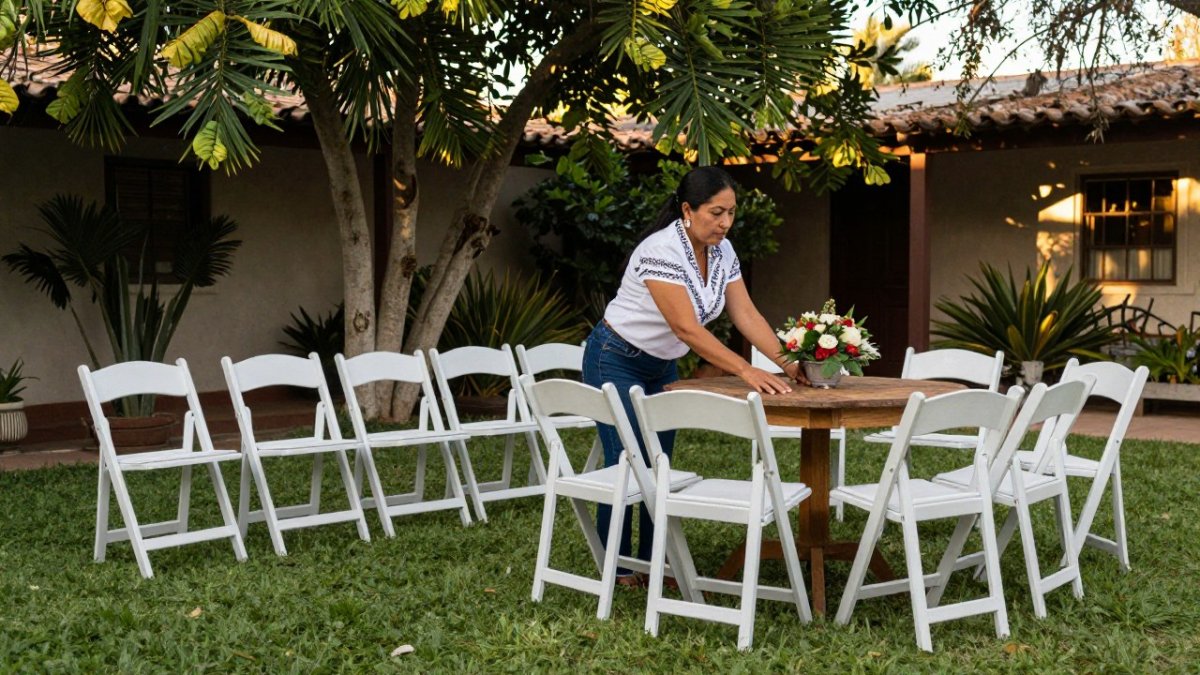
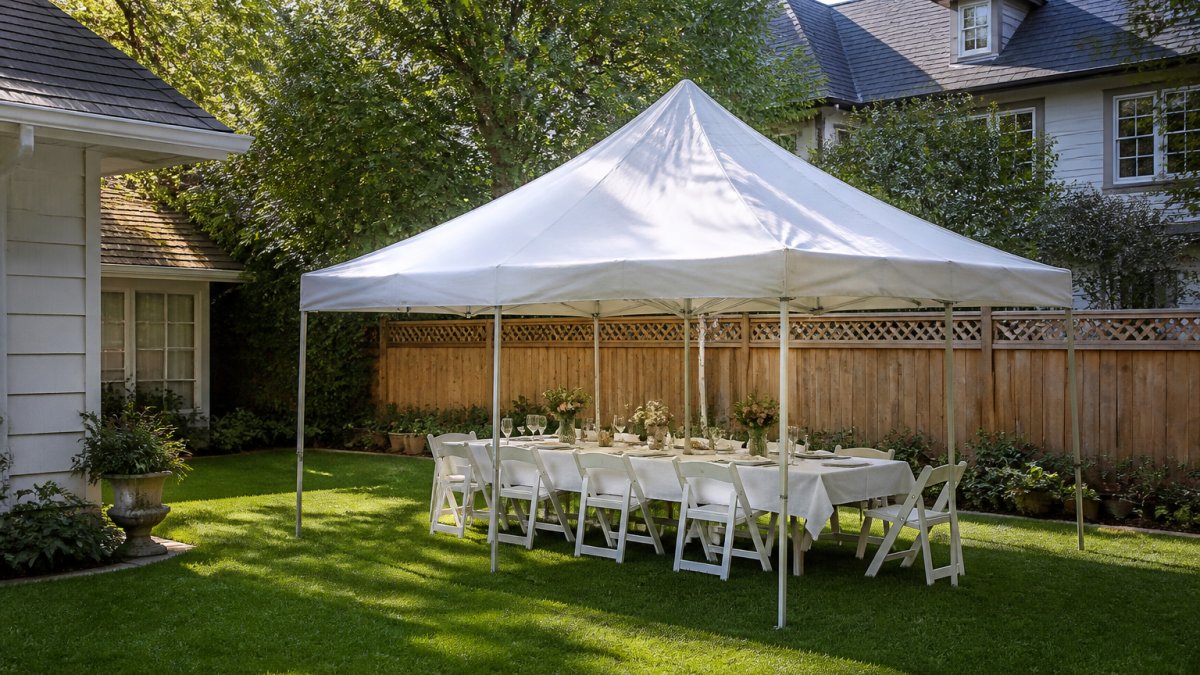
- Dinner-focused: Place long tables down the center with a dance floor at one end. Allow 3 feet between the table edge and the tent wall for chairs and serving access, and 4 feet between parallel tables so guests can pass. A 20-by-30-foot tent can seat about 40 guests at 8-foot banquet tables with a small dance floor.
- Ceremony-to-reception: Set rows of chairs at the front for the ceremony, then have staff flip the space to rounds for dinner. Rows need about 2.5 feet per chair width and 3 feet between rows. Leave a 4-foot aisle down the center. After the flip, rounds of 60 inches need 5 feet between tables for chairs and circulation.
- Mingling: Use high-top tables around the perimeter and keep the center open. High-tops need about 3 feet of clearance on all sides. A 20-by-20-foot tent holds six to eight high-tops comfortably with room to walk.
For concrete floor plans, see our backyard wedding tent layout examples to picture how tables and a dance floor fit a tight space.
Clearance for Overhead Obstructions and Property Boundaries
Most layout advice focuses on ground space, but overhead and perimeter obstructions can ruin a plan that looks fine on paper. Before you finalize any layout, walk the yard and note these clearance requirements:
- Tree branches: Leave at least 3 feet between the tent roof and any branch. Low branches can tear the fabric in wind and drop debris onto guests. If a branch is within 2 feet of the tent peak, plan to trim it or shift the tent.
- Power lines: Keep a safe distance from overhead power lines and confirm requirements with your local utility. Confirm clearance requirements with your local utility before setup.
- House eaves and gutters: Leave 2 feet between the tent edge and the house wall so water does not pour off the roof onto the tent.
A common mistake is measuring only the tent's covered area and ignoring what hangs above or sits just outside the perimeter. Measure the full footprint plus clearance on all sides, and look up.
Backyard Tent Setup Safety: Ground, Anchoring, and Weather
Safe setup starts with level ground and solid anchoring. A tent on soft or sloped ground can shift in wind. Check the forecast, and know that open yards catch more wind than sheltered ones.
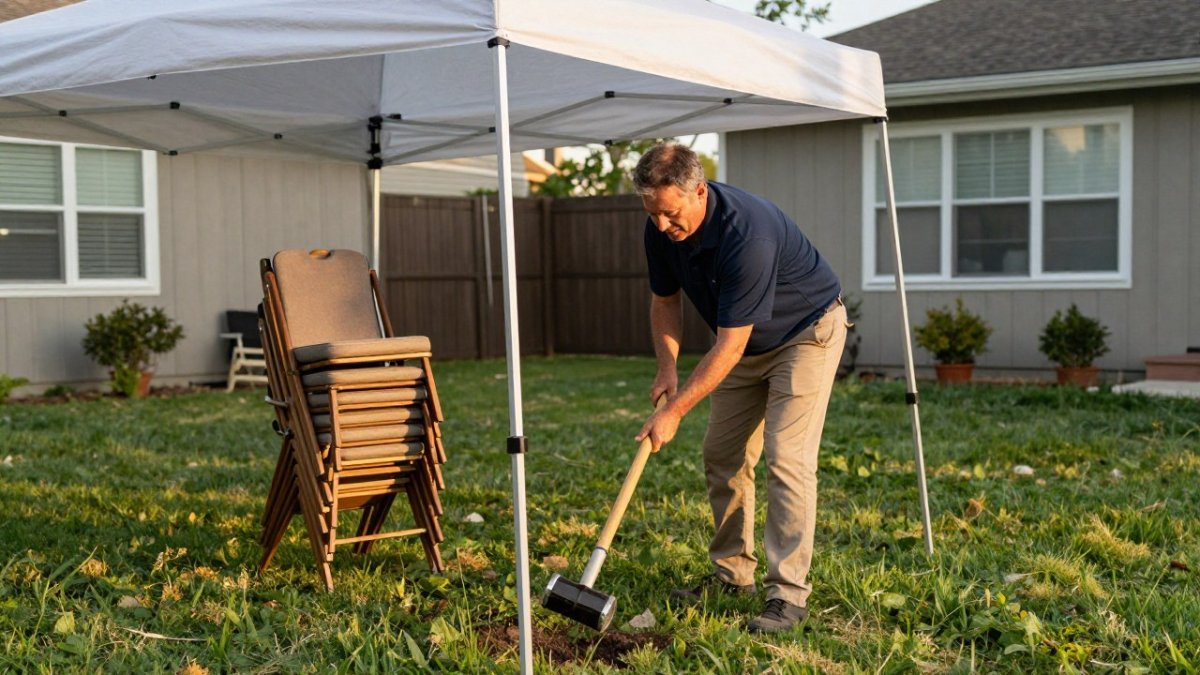
- Level the site: fill dips and clear rocks and roots.
- Anchor properly: use the right stakes for grass, or screw-in ground anchors for patios and hard surfaces.
- Add weight and stakes: secure every leg and tie-down point.
Watch out: skipping stakes on a calm morning is the mistake that ruins an afternoon. Wind picks up fast in an open yard. Keep the right tent stakes on hand for your surface.
Rental, Delivery, Setup, and Permit Questions to Ask First
Renting a tent for a small backyard involves more logistics than most homeowners expect. Delivery, setup, takedown, permits, and site access can all affect the final cost and whether a tent can be installed at your location. Ask these questions before you sign, and get the answers in writing.
Delivery and site access
- Can the delivery truck reach the setup spot? Delivery trucks need a clear path to the setup spot. If your backyard is behind a fence or down a narrow side yard, the crew may need to carry equipment by hand, which can add a labor fee.
- Is there a gate or doorway the crew must pass through? Measure the narrowest point. Measure the narrowest point on your access route before delivery.
- What is the delivery window, and is there a fee for rescheduling? Confirm the delivery and pickup schedule, and whether the tent stays up overnight.
Setup and takedown
- Who sets up and takes down the tent, and when? Ask how long setup and takedown will take for your tent.
- Is setup included in the quote, or is it a separate line item? Ask for a breakdown that shows tent rental, delivery, setup, and any after-hours fees.
- What happens if it rains during setup or takedown? Ask about the weather policy and whether a fee applies if setup cannot proceed.
Permits and local rules
- Do I need a permit for a tent in my backyard? Rules vary by town and by tent size. Permit requirements vary by town and tent size, so check with your local building or fire department. Check with your local building or fire department. The provider may handle permits for an extra fee, but the responsibility is often yours.
- Are there fire safety rules? Ask whether the tent meets local fire safety requirements. Ask the provider whether their tents meet local fire codes.
- Are there noise or event ordinances? Check quiet hours and whether amplified music is allowed outdoors.
Costs and payment
- What is the full cost, including delivery, setup, taxes, and any damage waiver? Pricing depends on quantity, dates, and delivery. Ask for an itemized quote from Backyard Events Rental.
- What is the deposit and cancellation policy? Ask about the deposit and cancellation policy before you book.
- Is there a damage waiver or security deposit? Confirm what you are responsible for if the tent is damaged during the event.
Want to see how a quote breaks down? Read our guide to a backyard party rental cost breakdown before you book.
Book Your Backyard Tent With a Site Check
Fitting an event tent in a small backyard comes down to honest measurements and the right size. Measure your usable space, subtract clearance, and match capacity to how guests will sit or stand.
That is where we come in. Backyard Events Rental offers tailored tent, table, chair, and lighting packages for backyard weddings, parties, and family gatherings.
Get started with Backyard Events Rental and book the tent that fits your yard and your guest list.
Frequently Asked Questions
How do I measure my backyard for an event tent?
Measure the longest and widest clear stretches of lawn, then subtract clearance for stakes, guy wires, and installation access. A tent's usable footprint is typically larger than its covered area. Note fences, buildings, trees, and utility lines, and check that the ground is level. Bring those numbers to your rental company so they can confirm a small backyard tent will fit before you book.
What size tent fits in a small backyard?
It depends on your usable space, not the lot size alone. Measure your usable space, then ask your rental provider which tent sizes fit your yard. Measure first, then match party tent sizes and capacity to your guest list so the tent leaves room for tables, chairs, and safe walking paths.
How much clearance should I leave around a party tent?
Plan for additional space beyond the tent's edges for stakes, guy wires, and setup access. Keep additional space from fences, buildings, and tree limbs, and stay clear of utility lines and property boundaries. Clearance also matters for guest circulation and emergency exits. If your yard is tight, ask the rental company about staking alternatives or a smaller footprint before you commit.
Can a tent be set up on a small or uneven lawn?
Often yes, but level ground matters for safety. Walk the site and note slopes, soft spots, and drainage paths. Backyard tent setup safety depends on solid anchoring, so confirm where stakes can go and whether underground utilities run through the yard. If the lawn slopes or drains poorly, ask the rental company about site preparation or a different placement. A quick site check before delivery prevents surprises on event day.