 Ultimate guide
DIY Backyard Wedding Logistics: A Complete Planning Guide
Quick Summary
Backyard wedding logistics is the planning work that makes a home event function: confirming the site can hold your guests, securing permits and liability coverage, and arranging power, water, restrooms, waste, catering, and rental equipment. Work backward from your date, get every commitment in writing, and assign one person to coordinate vendors on the day.
- Sketch your lot and mark fences, slopes, trees, and utility lines before choosing a layout.
- Ask each local agency for permit answers in writing, since verbal assurances are not permits.
- Build a load list of every power-drawing device and compare it against your circuit capacity.
- Ask every vendor for a certificate of insurance before the event.
- Start the planning timeline twelve months out and book rentals and caterers six months out.
Table of Contents
- Start With a Site Assessment: Is Your Backyard Big Enough?
- Backyard Wedding Permit Requirements, Noise Rules and Liability
- Power, Water, Restrooms and Waste: The Infrastructure You Can't Skip
- Affordable Backyard Wedding Catering Options
- Backyard Wedding Rental Equipment List: Tents, Tables, Chairs and Lighting
- Building Your Backyard Wedding Checklist and Planning Timeline
- Booking Your Equipment Rental for Your Backyard Wedding
- Frequently Asked Questions
DIY Backyard Wedding Logistics: A Complete Planning Guide
Last Updated: November 12, 2026
Start With a Site Assessment: Is Your Backyard Big Enough?
A DIY backyard wedding works only if the property can physically hold the event, and that check is the first step in any sound backyard wedding logistics plan.
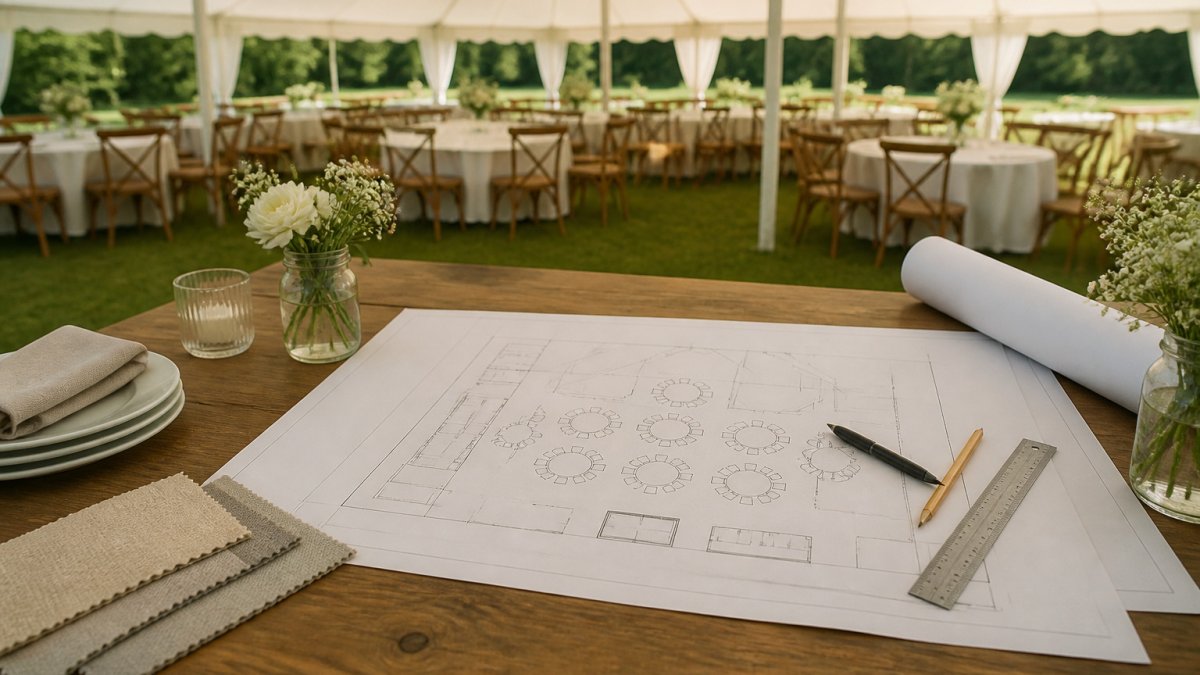
Start with a rough site map: sketch your lot, mark the house, fences, slopes, trees, and utility lines, then note where ceremony, cocktail hour, and reception could sit. Larger weddings or complex setups often benefit from professional guidance on installation.
Measuring Guest Count, Space Planning and Guest Flow
Your guest count drives almost every other decision. Measure the lawn in feet, then allow room for seating, a dance floor, a serving area, and clear paths between ceremony, bar, restrooms, and parking.
Think about guest flow before committing to a layout. Where will people line up for food, and gather during cocktail hour? If the path from house to restroom runs through the dance floor, reposition now rather than during the event.
Backyard Wedding Permit Requirements, Noise Rules and Liability
Permit requirements for gatherings, alcohol service, and amplified sound vary by county and city, so research the rules for your specific property and get answers in writing. Build a research file six to twelve months before the date.
A Jurisdiction-by-Jurisdiction Research Checklist
Start with the agency that governs the property and work outward. For each item below, record the agency name, the person you spoke with, the date, and what they told you.
- Zoning and land use: Ask the local planning or zoning office whether a private event with a tent, temporary structures, and a caterer is allowed on a residential parcel, and whether there is a limit on guest count or event frequency.
- Tent and temporary structure permits: Many jurisdictions require a permit for tents above a certain size, and some require flame certificates or engineered anchoring. Ask the fire marshal or building department what triggers a permit and what inspection is required.
- Amplified sound and noise ordinances: Ask for the decibel limit, the permitted hours, and whether a wedding is treated differently from a construction or commercial noise source. Confirm whether a permit or variance is available if your event runs later than the standard cutoff.
Watch out: verbal assurances from a clerk are not a permit. Ask for the answer in writing or by email, and keep the reply in your research file.
Liability: What to Confirm and What to Buy
Liability is the part most DIY hosts overlook, and it has two layers: your homeowners policy and event-specific coverage.
Call your homeowners insurance agent and ask three questions: Does the policy cover a private event with guests on the property? Does it cover alcohol-related incidents, or is there an exclusion? Does it cover rented equipment, tents, and temporary structures, or does the rental company's policy govern? Get answers in writing.
If you are serving alcohol or hosting a large crowd, ask about a one-day or short-term event liability policy.
Ask every vendor for a certificate of insurance before the event. A caterer, bartender, or rental company that cannot produce one is a risk you are absorbing.
Emergency and Medical Readiness
Keep the nearest fire station's emergency number and the non-emergency police line where a designated person can reach them quickly. Identify who will call emergency services, and make sure it is not the person coordinating vendors. Note the nearest hospital and route, and keep a first-aid kit and any guest medical information in a known location.
Put the Compliance File Together
By one month out, your file should contain written answers from each agency, any permits, certificates of insurance from every vendor, and a one-page summary of the rules that apply on the day. Share the summary with your coordinator and caterer so no one guesses about noise cutoffs, alcohol service, or emergency access.
Power, Water, Restrooms and Waste: The Infrastructure You Can't Skip
Infrastructure is where DIY budgets often go sideways, and where a backyard event most often fails on the day. Treat power, water, restrooms, and waste as four separate plans with their own quantities, vendors, and backup triggers.
Power: Build a Load List Before You Book Anything
List every device that will draw power and the watts or amps it needs: catering equipment (warming cabinets, coffee urns, refrigerated trailers), lighting (tent chandeliers, string lights, path lighting), sound system and DJ or band gear, and any fans, heaters, or refrigeration for weather.
A few practical rules most electricians and rental coordinators apply:
- Check the amperage rating of your household circuits before planning your load.
- Keep catering equipment on dedicated circuits separate from lighting and sound. A warming cabinet that trips a breaker should not also kill the tent lights and the microphone.
- Map which outlets are on which breaker before the event and label them. Walk the panel with your electrician and write the breaker numbers on a card for the day-of coordinator.
Watch out: extension cords daisy-chained across a lawn are a leading cause of both tripped breakers and trip-and-fall injuries. Use cable ramps over walkways and keep cord runs as short as possible.
Water: Potable Supply and Handwashing
Confirm where potable water will come from for drinking, food prep, and handwashing. If your caterer needs a sink or three-compartment wash setup, ask whether they bring their own water and gray-water containment or expect to use your house.
Plan handwashing stations near the restrooms and near the food service area. A common pattern is a portable station with a fresh-water reservoir and a gray-water catch tank, so no one has to run into the house with dirty hands.
Restrooms: Capacity, Placement, and Access
Restrooms are non-negotiable for any guest count above a handful, and the planning question is capacity, not just presence.
Placement matters as much as count. Put restrooms away from food prep and seating, but on a lit, clearly marked path guests can find without crossing the dance floor or wandering into the dark.
Watch out: an accessible unit that is placed at the end of an uneven gravel path is not actually accessible.
Waste: Trash, Recycling, and Cleanup
Plan trash and recycling capacity before the event. Estimate trash and recycling capacity based on guest count and your hauler's requirements. Confirm who empties the containers during the event and where the bags go at the end of the night.
Ask your caterer what they remove and what they leave behind. Many haul out their own food waste but leave plates, glassware, and linens for the rental company.
Put the Infrastructure Plan in Writing
Build a one-page infrastructure sheet listing each utility, the vendor or person responsible, the delivery and setup window, the backup plan, and the day-of contact. Share it with your coordinator and caterer. When power, water, restrooms, and waste each have an owner and a backup, the invisible parts stop being the parts that go wrong.
Affordable Backyard Wedding Catering Options
Catering is often the largest variable expense, and there are several ways to control it. Buffet-style service with a limited menu usually costs less than plated dinners, and some hosts choose food trucks or a single caterer who handles everything.
Whatever you choose, confirm kitchen access, refrigeration, and a clear cleanup plan with your caterer before you sign anything. Ask every food provider for written confirmation of what they will supply and what you must provide.
Backyard Wedding Rental Equipment List: Tents, Tables, Chairs and Lighting
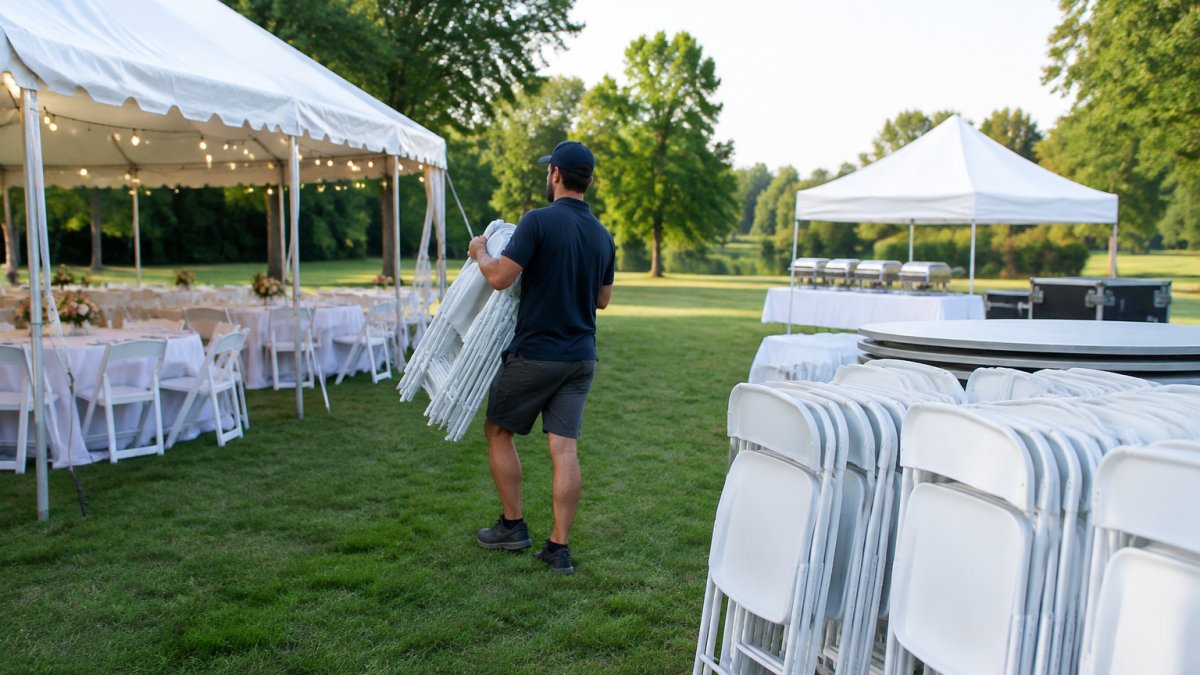
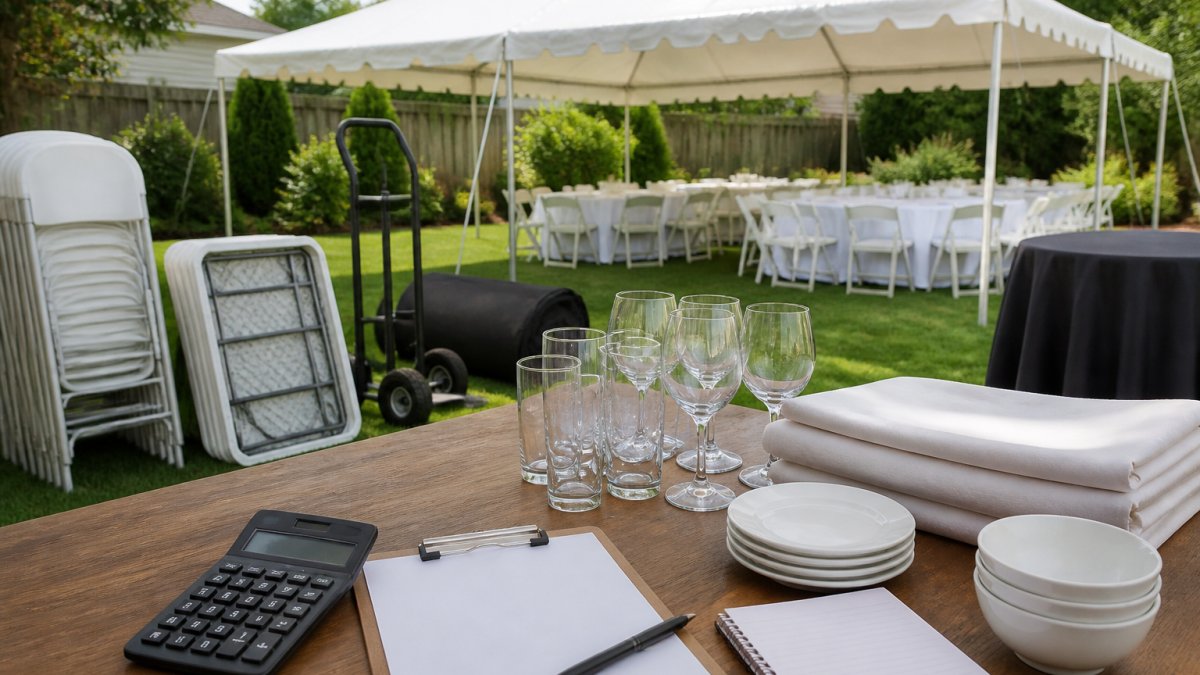
Renting is usually the most practical way to get professional-grade infrastructure without buying it. A typical list includes a tent sized to your guest count, tables and chairs, linens, lighting, and flatware, plates, and glassware for every guest.
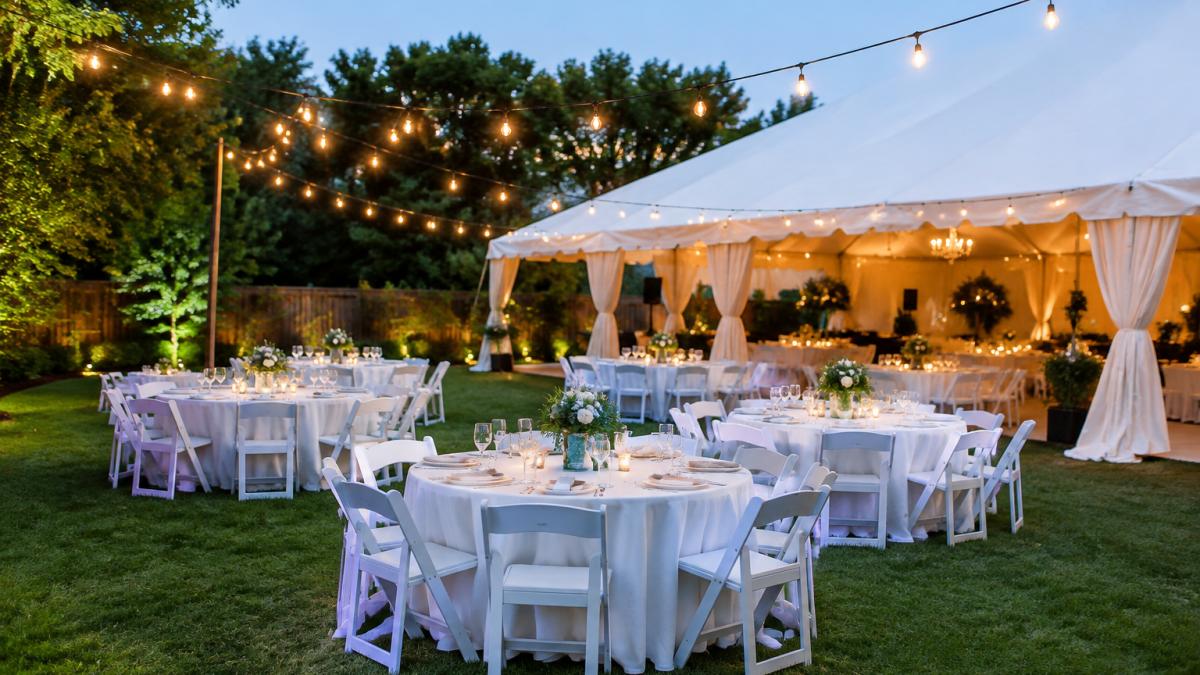
!A backyard set for an evening celebration with a white tent, round tables and chairs, and string lights overhead on a lawn
Backyard Events Rental offers tents, tables, chairs, and lighting for weddings and gatherings. You can browse our chairs available for rent, and our tables for every setup cover everything from cocktail rounds to long banquet runs. For tent planning, our 20 x 20 foot marquee tent suits intimate to mid-sized events.
The core rental items for a backyard wedding, at a glance:
| Item | Role | Planning note |
|---|---|---|
| Tent | Shelter for guests | Sized to guest count |
| Tables | Seating and serving | Quantity depends on guest count |
| Chairs | Guest seating | Quantity depends on guest count |
| Lighting | Illuminates the event | Plan with power load list |
| Linens, flatware, plates, glassware | Dining service | One set per guest |
| 20 x 20 ft marquee tent | Intimate to mid-sized events | Example tent size offered |
Building Your Backyard Wedding Checklist and Planning Timeline
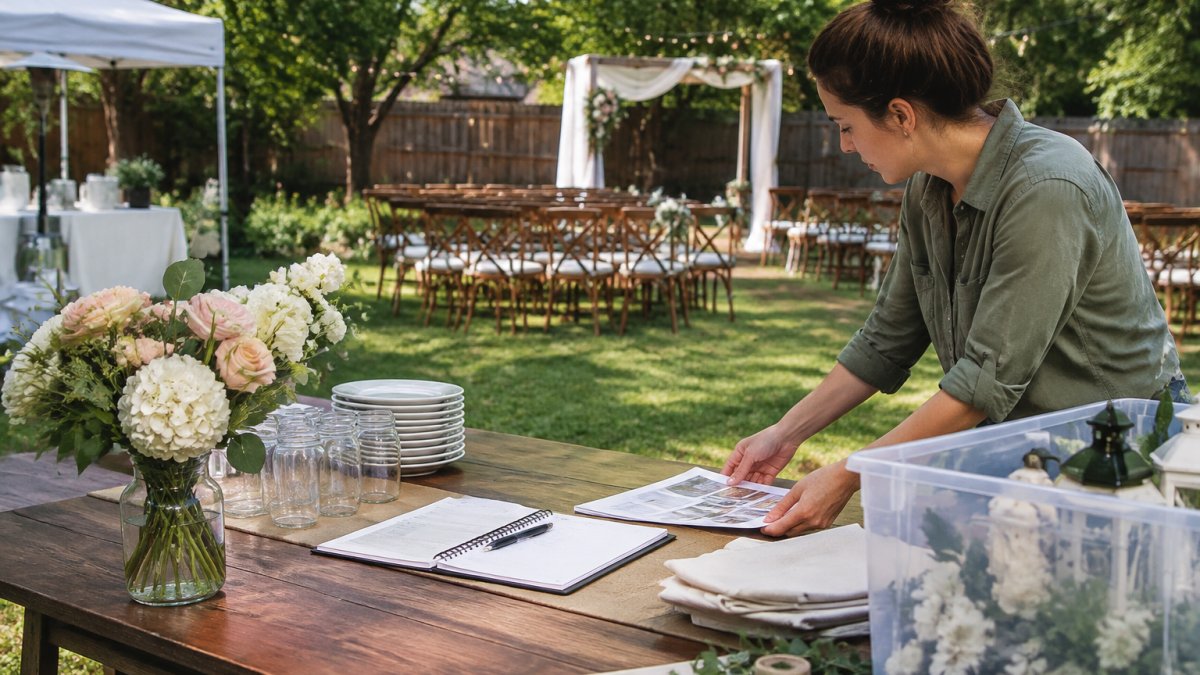
A reliable backyard wedding checklist keeps logistics from slipping. Work backward from the event date:
- Twelve months out: Confirm the property, guest count, and budget. Start checking permits and zoning.
- Six months out: Book your tent, rentals, caterer, and restroom service. Reserve power and generator needs.
- Three months out: Finalize the site map, delivery schedule, and parking plan.
For a weather backup plan, think ahead about what happens if rain arrives. Read our guide to avoiding rental delays before you lock in dates.
Booking Your Equipment Rental for Your Backyard Wedding
Book early, especially for weekend dates, and ask for a written quote listing delivery, setup, pickup, and any damage or cancellation terms. Confirm the delivery window and who will meet the crew on site.
Backyard Events Rental can help with the equipment side of your celebration. Request a quote and tell us your guest count and yard layout. Book now to lock in your date.
Frequently Asked Questions
Do I need a permit to have a wedding in my backyard?
Often, yes. Permit requirements for gatherings, alcohol service, and amplified sound vary by county and city, so there is no single answer for every property. Check with your county and township offices 6 to 12 months before the wedding, since zoning and noise rules can affect whether a large tent or music is allowed. Ask specifically about temporary structures, alcohol permits and any limits on guest count. Getting written confirmation protects you if a neighbor complains on the day of the event.
What are the must-haves for a backyard wedding?
The essentials are a suitable space with room for seating and guest flow, a weather plan such as a tent, enough power for lighting, sound and catering equipment, restroom access, parking and a clear waste management plan. Many hosts also underestimate the need for shade, seating for older guests and lighting for paths. Build your logistics around these basics first, then add decor. A backyard wedding that gets the infrastructure right feels effortless to guests.
How do I manage guest parking for a backyard wedding?
Plan parking before you send invitations. Estimate one vehicle for every two or three guests, then identify whether street parking, a neighbor's driveway or a nearby lot can absorb the overflow. Mark a clear route to the backyard, and consider a shuttle or ride-share plan if parking is limited. Keep vendor and delivery access separate from guest parking so trucks do not block the street during setup and breakdown.
How do I handle trash and sanitation for a large backyard event?
Arrange waste management before the event: order enough dumpsters or bins for your guest count, schedule pickup for the day after, and place trash and recycling stations near the food and bar areas. Restroom planning matters as much as trash. Portable toilets are commonly rented by the unit, so plan capacity based on guest count and event length, with a handwashing station nearby. Assign one helper to check and empty bins during the reception.
What should I include in a backyard wedding checklist?
A useful backyard wedding checklist covers the site (size, lawn condition, access), permits, rental equipment such as tents, tables, chairs and lighting, power and water, restrooms, catering and kitchen access, parking and transportation, a weather backup plan, vendor delivery windows and end-of-event cleanup. Break each item into a deadline so the tasks are spread across months rather than the final week.
Can a DIY backyard wedding actually be cheaper than a venue?
Not always. Some DIY backyard weddings end up costing more than all-inclusive venues once you add up power, restrooms, site preparation, rentals and labor. Hidden costs are the main reason. Build an itemized budget that includes every rental and utility before deciding. Your rental company can give you a quote based on your guest count, dates and delivery needs, and pricing depends on quantity, dates and delivery. Check Backyard Events Rental's website for current prices or request a quote.
How far in advance should I book backyard wedding rentals?
Book as early as you can, especially for peak wedding season on weekends. Locking in your date early helps protect availability. If you are planning on short notice, ask your rental provider whether last-minute requests can be accommodated. Confirm delivery and setup times in writing to avoid last-minute gaps.